Budget for the whole AV setup
Use the same equipment, accessory and agreed-work scope for each quote, with any reserve clearly identified as your own assumption.
Updated:

Define the scope before comparing headline prices
A useful AV budget identifies the exact equipment, included parts, required accessories and agreed work. Use the same categories for every candidate. A television-only offer is not directly comparable with a supplied and installed television-plus-audio arrangement. Keep tax and delivery treatment explicit in the actual quote rather than assuming that a prominent price covers every category.
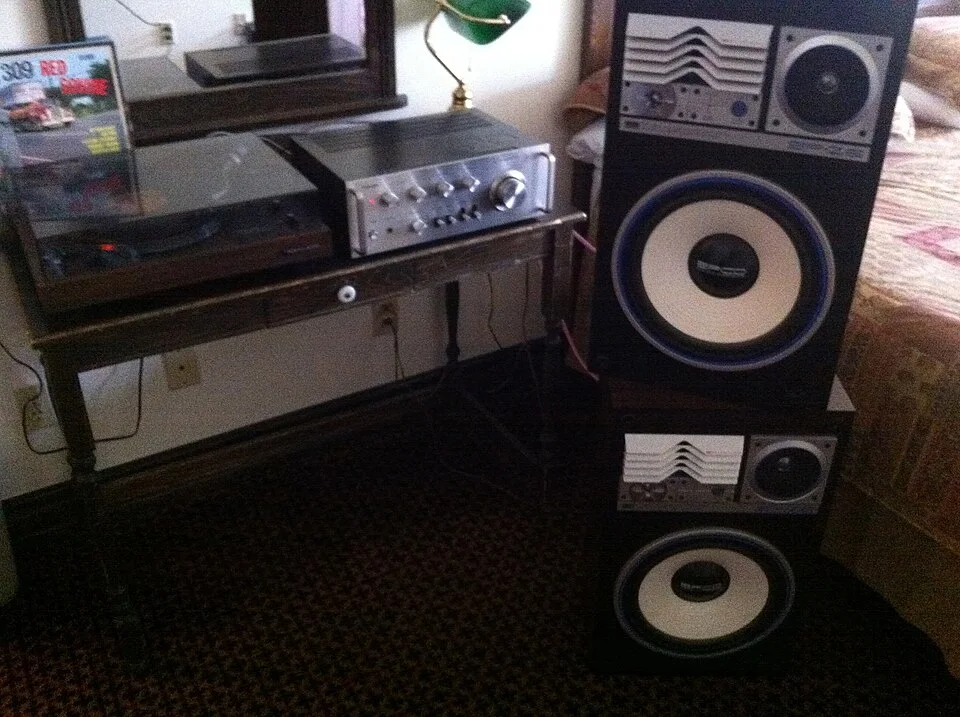
The archived component-system photograph illustrates why a complete arrangement can involve several pieces. It is not a currently priced bundle, an approved stacking plan or an amplifier-match test. Establish what the proposed system actually requires before treating its equipment list as complete.
Carry the declared arithmetic to the final planning total
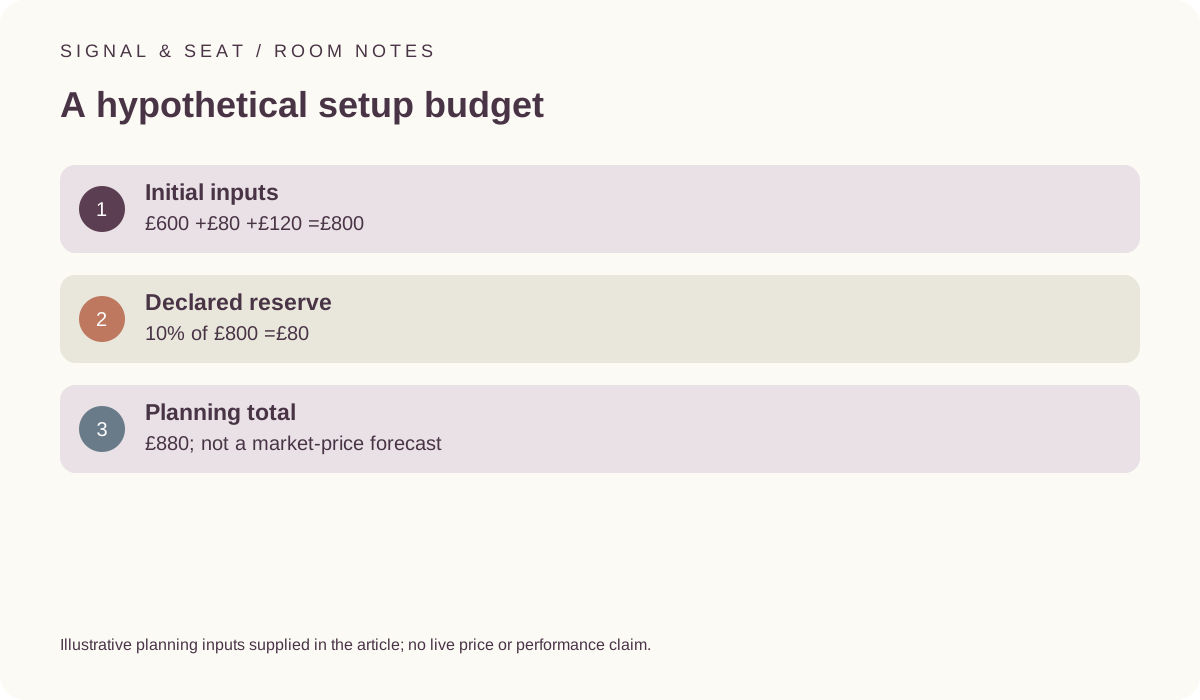
Assume, hypothetically,£600 of equipment,£80 of accessories and delivery, and £120 of agreed work. The stated inputs total £800. If you choose a10% planning reserve, that adds £80, producing £880. These are invented amounts and an explicit reserve assumption, not current prices, a quote or a prediction of repairs and future spending.
Our setup-budget tool performs exactly this arithmetic on entered values. A reserve is not a charge already agreed with a seller, so keep it separate when discussing a real order. The total includes only the categories entered. Do not present it as a guaranteed lifetime cost or infer that every unknown future expense has been covered.
Identify necessary accessories through the exact documents
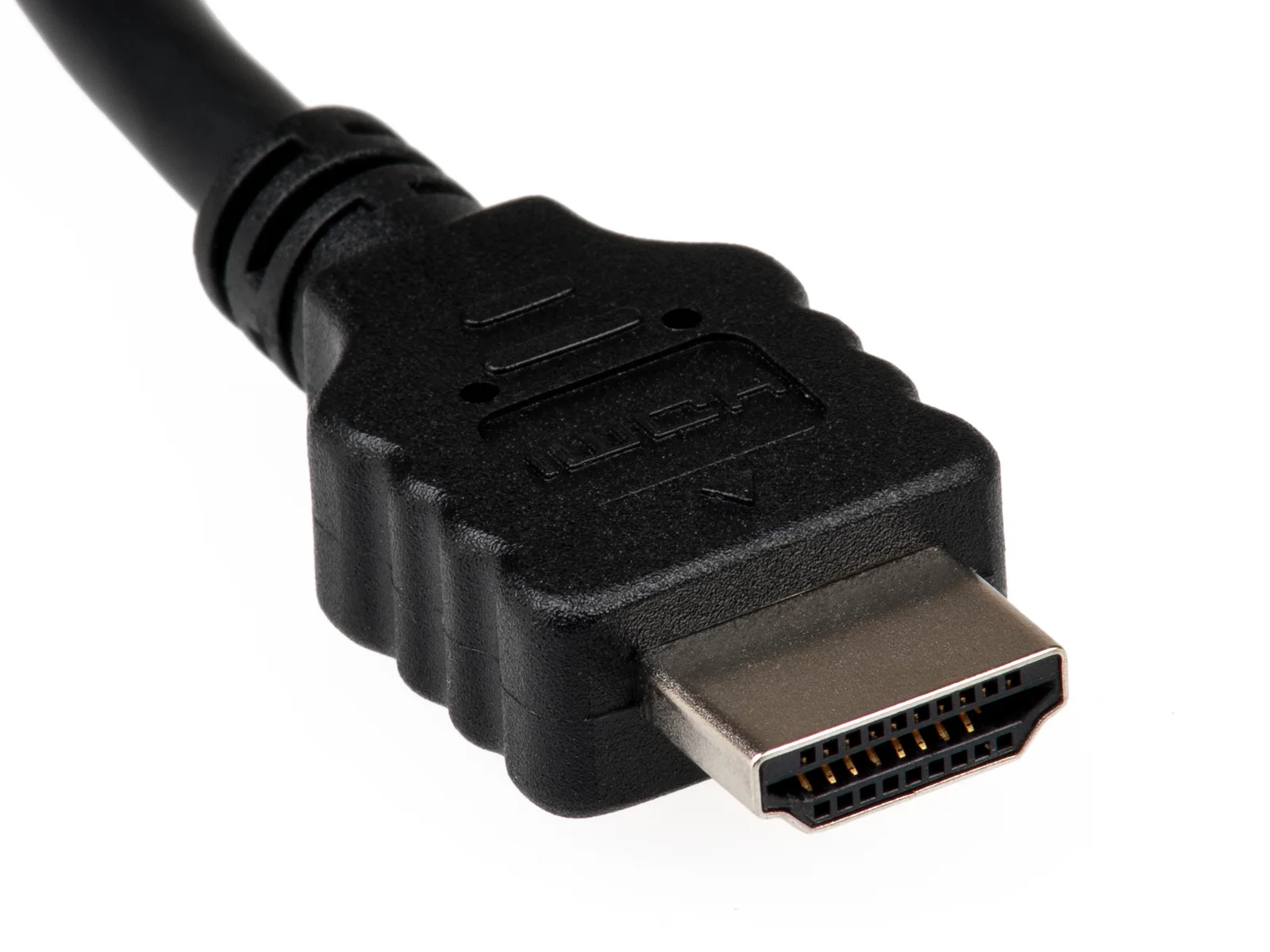
A cable, stand or other accessory belongs in the budget only after its applicability is established. Preserve the model and compatibility information rather than adding a generic item because it looks suitable. A physical HDMI plug photograph cannot establish certification, required features or an appropriate length. A lower accessory subtotal is not meaningful if it omits a necessary documented item.
LG’s UK television information and the UK Beam Gen 2 fact sheet are examples of product-specific sources. Their statements belong to their named products, not to the archived equipment pictured here. Use the relevant actual documents to determine which parts are supplied and which questions remain unresolved.
LG UK OLED55C44LA dimensions and connections ? Sonos Beam Gen2 UK manufacturer fact sheet ?
Keep services and purchase terms in their own records
Read the actual delivery, installation and retailer terms for the order. Do not assume that a television service covers separate audio equipment or that every bundle uses the same return or warranty conditions. Save the receipt and included-parts list so that the scope can be identified later. A service claim should be supported by the actual offer, not by a photograph.
Richer Sounds’ UK unwanted-item guidance illustrates that purchase channels and conditions matter. It is not a universal policy or a determination of an individual refund. Keep the seller’s applicable return information and product warranty separate from the arithmetic in our planner.
Richer Sounds UK unwanted-item policy ?
Use the budget after the practical requirements are reviewed
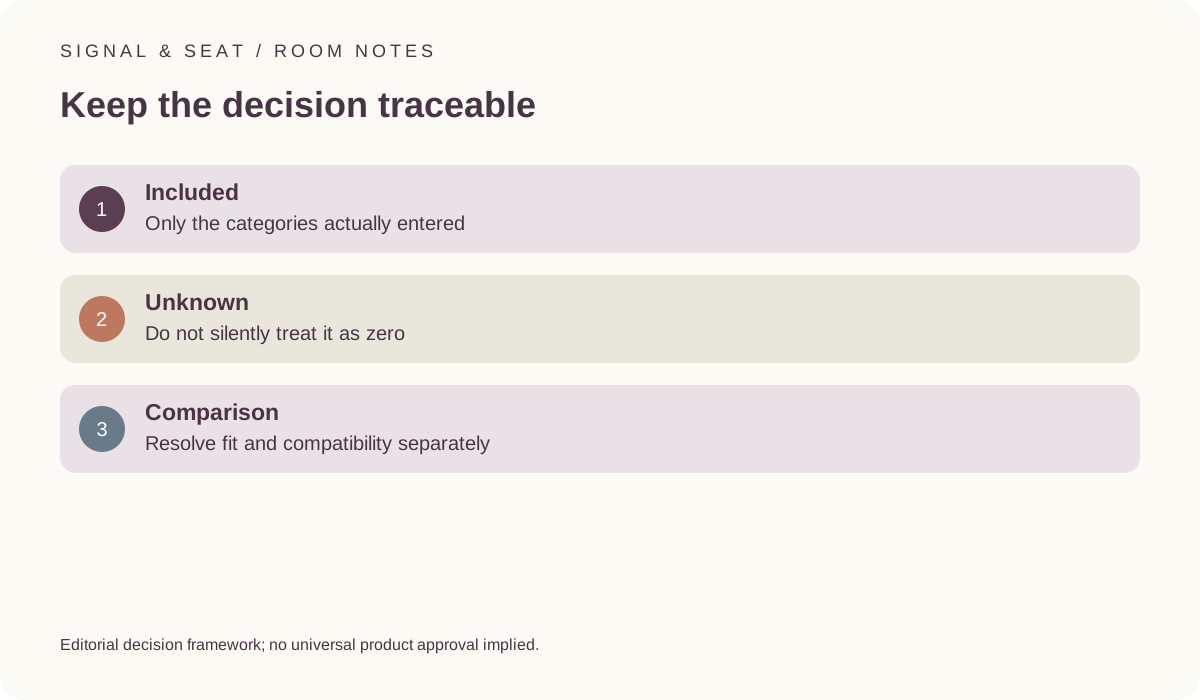
A small planning total cannot make equipment fit the furniture, establish an audio format or approve a projector position. Resolve significant space and signal-path questions first, then compare candidates that plausibly address the same task. Keep personal preferences and untested performance questions visible instead of assigning invented monetary benefits to them.
Save the input values, quote date and scope with the result. Update the record if the model, bundle or agreed work changes. The useful final comparison states what is included, which allowance is hypothetical and what remains unknown. It should not imply a measured picture or listening advantage merely because one subtotal is lower.