Trace an audio format through the whole system
Keep content, source output, television handling and the receiving audio device together when reviewing a format claim.
Updated:
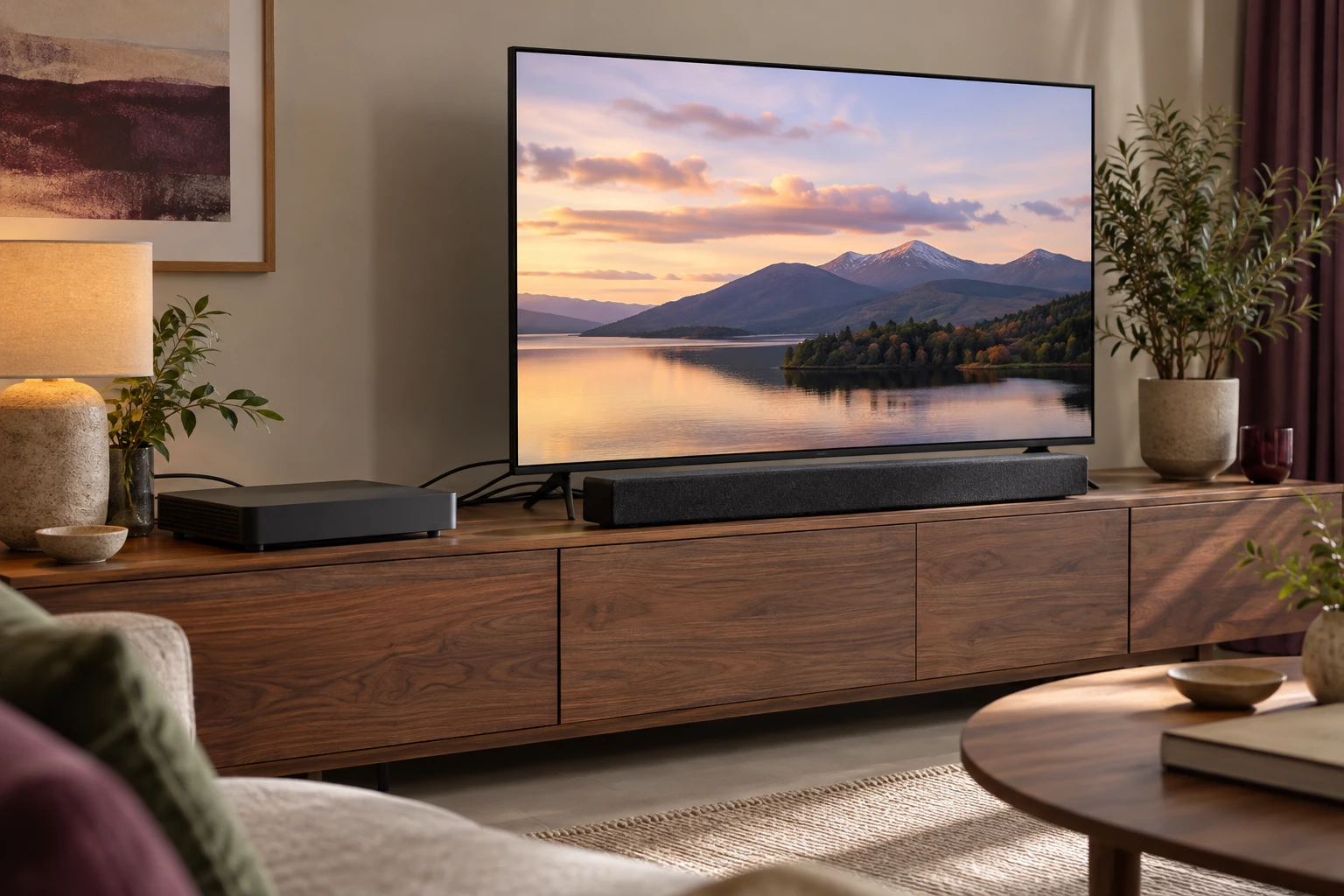
Name the format and the actual source
A desired audio format should be reviewed with the content, source device or app and its documented output conditions. A badge on an audio product does not establish that every programme or source produces that format. Start by naming the actual material and equipment rather than combining generic compatibility lists into one imagined result. Keep the source’s relevant settings and limitations attached to it.
The HDMI plug photograph identifies connector shape only. It cannot establish a format, bandwidth or the behaviour of equipment at either end. A useful buying record distinguishes a physical connection from a supported signal and from an actual observed result.
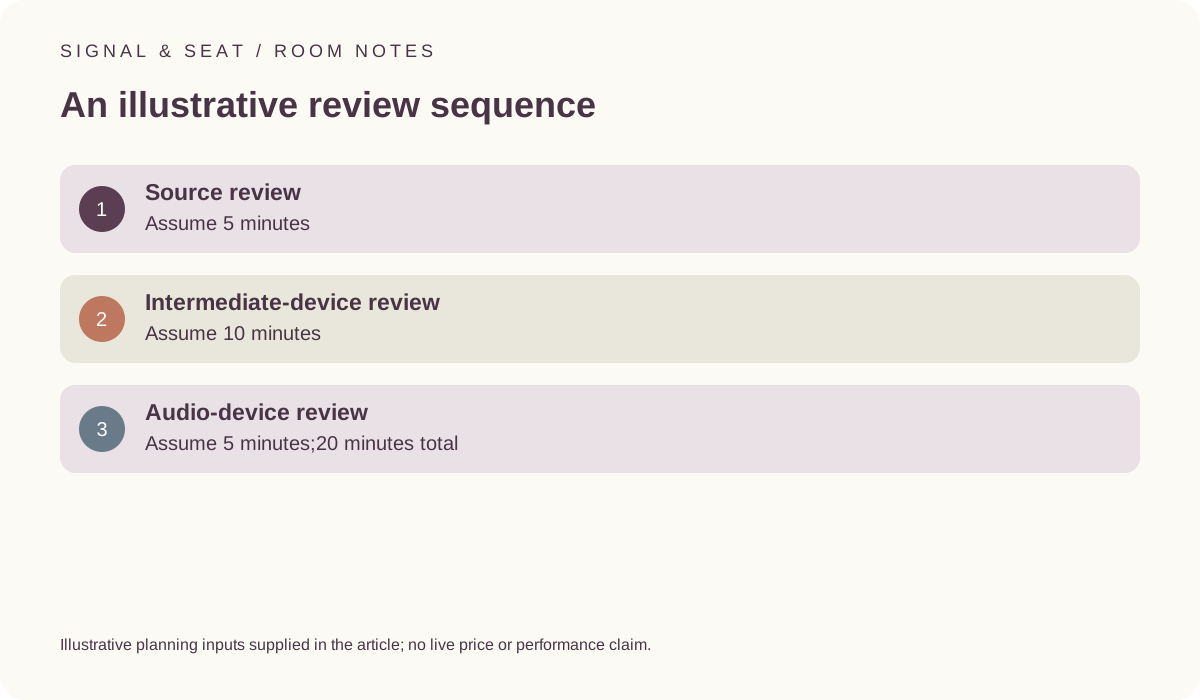
Allocate review work without claiming a setup guarantee
For an illustrative sequence, assume 5 minutes to identify the source conditions,10 minutes to review any intermediate-device handling and 5 minutes to read the audio-device requirements. The total is 20 minutes. These are invented time allowances, not measured setup times or a promise that an uncertain system can be resolved within that period.
The purpose is to ensure that every relevant link receives its own record. If a link remains undocumented, preserve the uncertainty instead of allowing the available review time to force a positive conclusion. A short checklist can organise evidence; it cannot create missing compatibility or turn separate product claims into a verified combination.
Preserve the format conditions in the named soundbar document
The UK Sonos Beam Gen 2 fact sheet distinguishes listed home-cinema audio formats and marks an eARC connection requirement for some entries. Read the exact entries and conditions relevant to the intended source. Do not reduce that information to a claim that any HDMI connection produces every listed format. The fact sheet is a manufacturer statement, not our listening test.
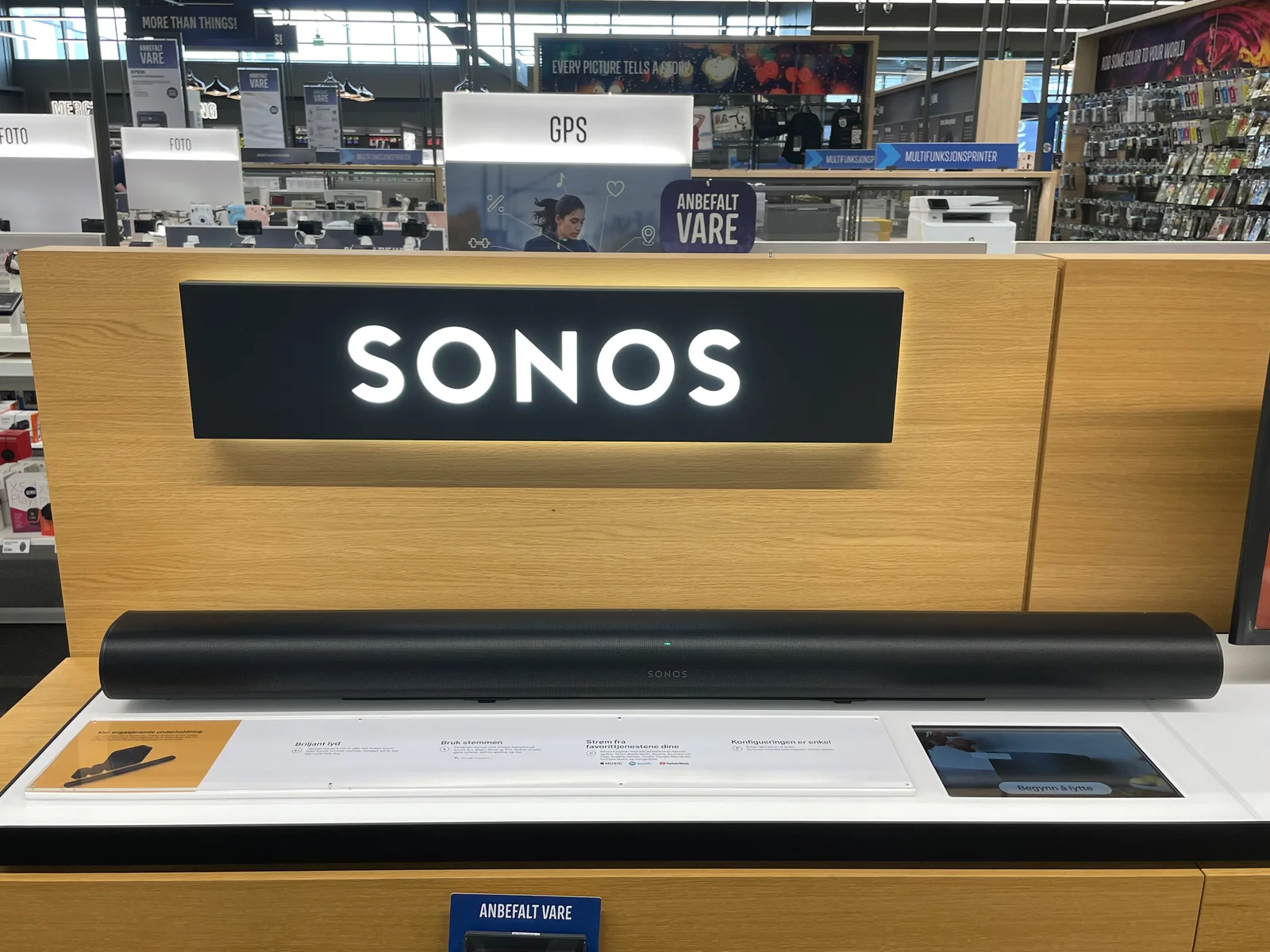
The curved bar in the photo is a different archival product. It does not establish Beam Gen 2 specifications or a current firmware state. Keep full model names and the checked source date in the record so that a familiar brand or family name does not silently inherit another product’s capabilities.
Sonos Beam Gen2 UK manufacturer fact sheet ?
Read television and return-channel handling separately
If the path passes through a television or other equipment, review its exact documented handling and relevant settings. LG’s UK OLED55C44LA information identifies a designated eARC input, while HDMI’s own eARC information explains the capability at a specification level. Neither source is a test of the complete combination of source, display, cable and audio device in your room.
Keep picture-path and return-audio questions distinct. A source may need different conditions for the desired video and audio tasks, and one successful claim does not settle the other. The archived television photo is not evidence for the named LG model or a substitute for its actual documentation.
LG UK OLED55C44LA dimensions and connections ? HDMI Licensing Administrator: enhanced audio return channel ?
Record what has and has not been established
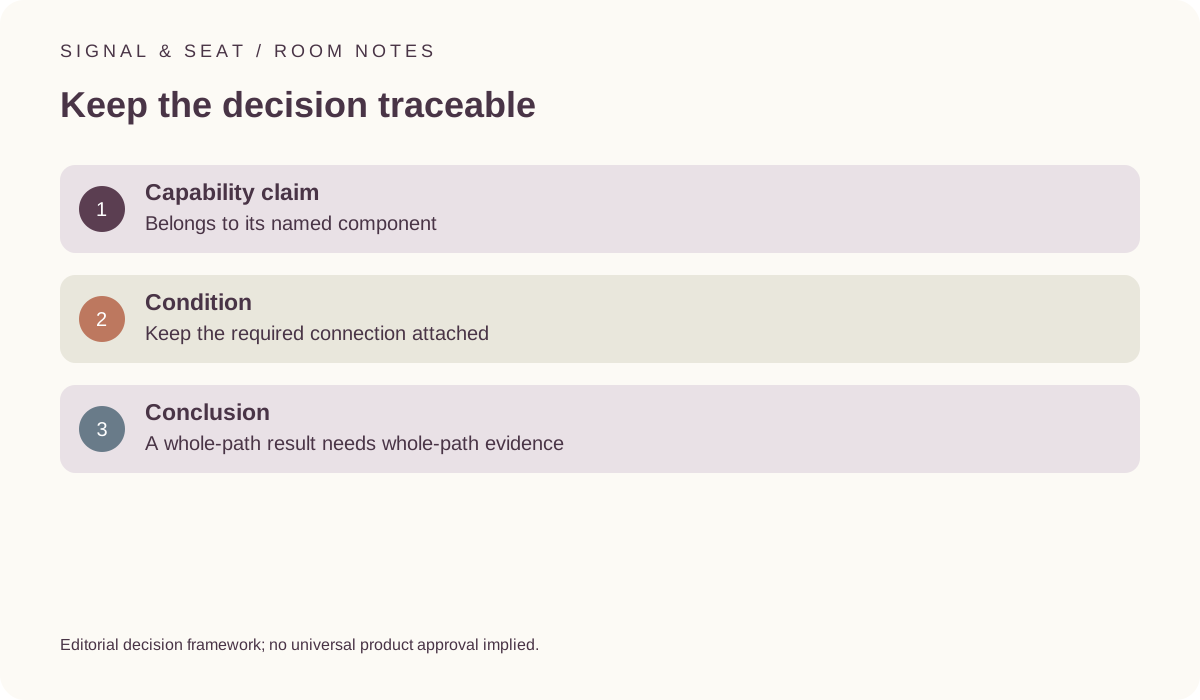
Save the content or source, model identifiers, relevant conditions and source links together. Distinguish an attributed capability from an actual observation in an existing system. If the evidence does not establish an important link, keep that gap visible before purchasing an adapter or replacement component intended to solve it.
The final comparison should explain the whole intended path without promising that a port, logo or format list guarantees the listening result. It should also avoid assigning fault to one component merely because a high-level expectation was not met. A traceable record helps direct a model-specific review while preserving the limits of the available evidence.