Read an HDMI cable claim with its limits
Preserve the official cable-category and certification information without treating it as proof of every connected device’s capabilities.
Updated:
Keep the actual cable identity with the claim
Record the exact cable model, length and the evidence behind its stated category. HDMI Licensing Administrator provides official cable-type and certification information. Use that source to distinguish the relevant designation from a retailer’s broad marketing phrase. Do not assign a cable capability from connector shape or a familiar version number alone.
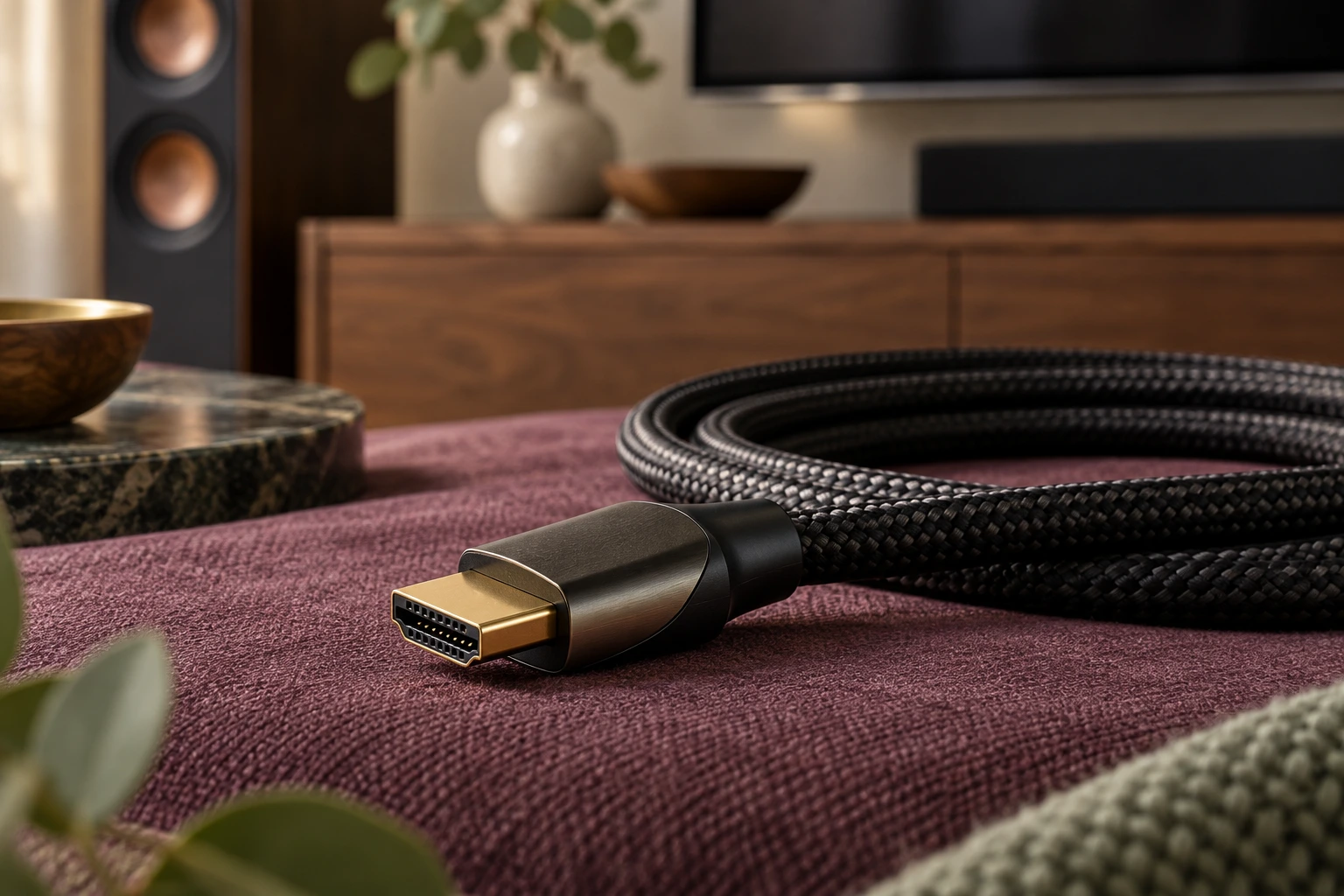
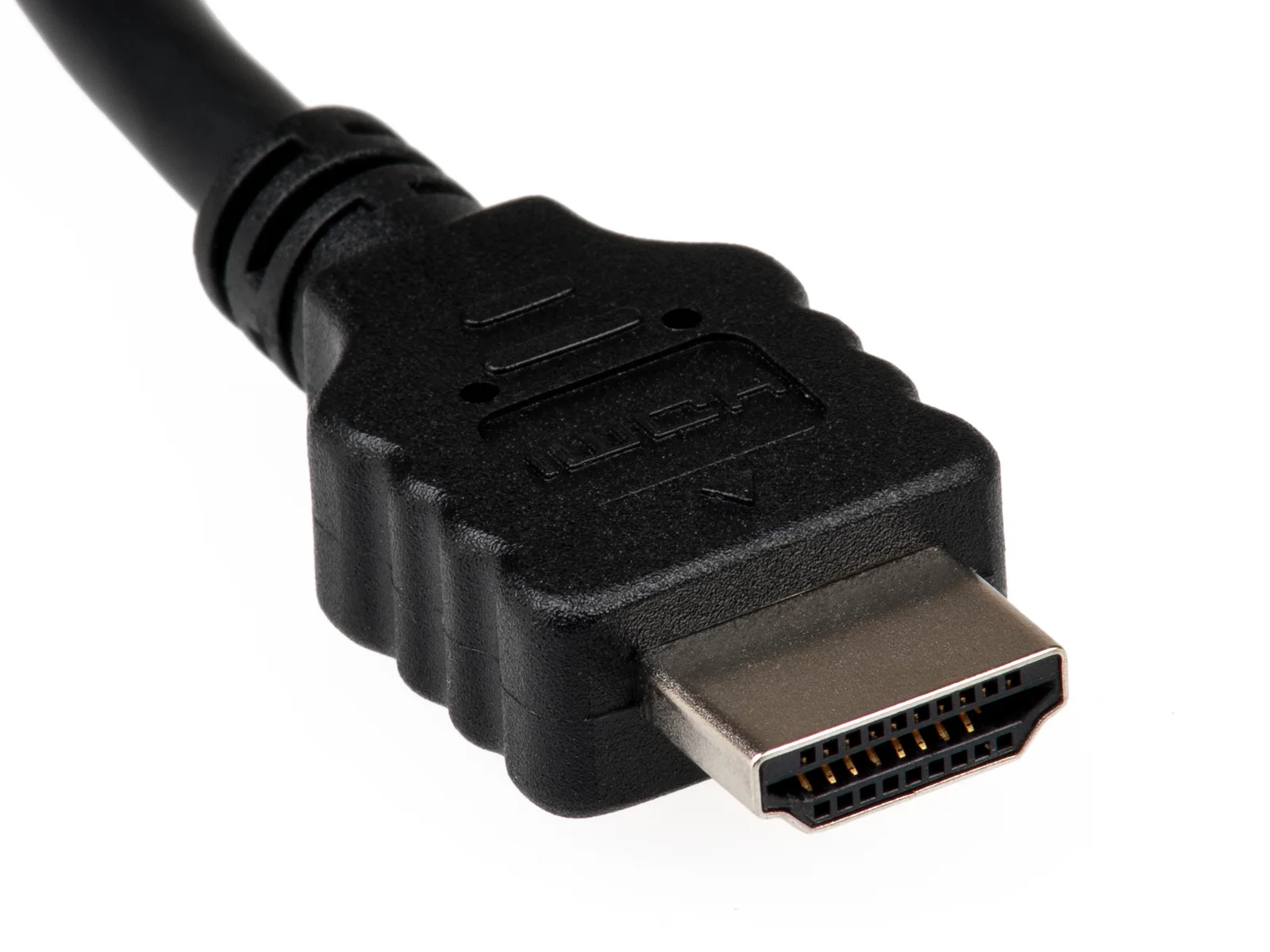
The HDMI TypeA plug image is physical identification only. It is not a certification label or a test of the cable you are considering. A buying record needs the actual product information and the requirement it is intended to meet, rather than treating the photograph as evidence that every similarly shaped cable is equivalent.
HDMI Licensing Administrator: official cable types ?
Measure length without inventing a performance limit
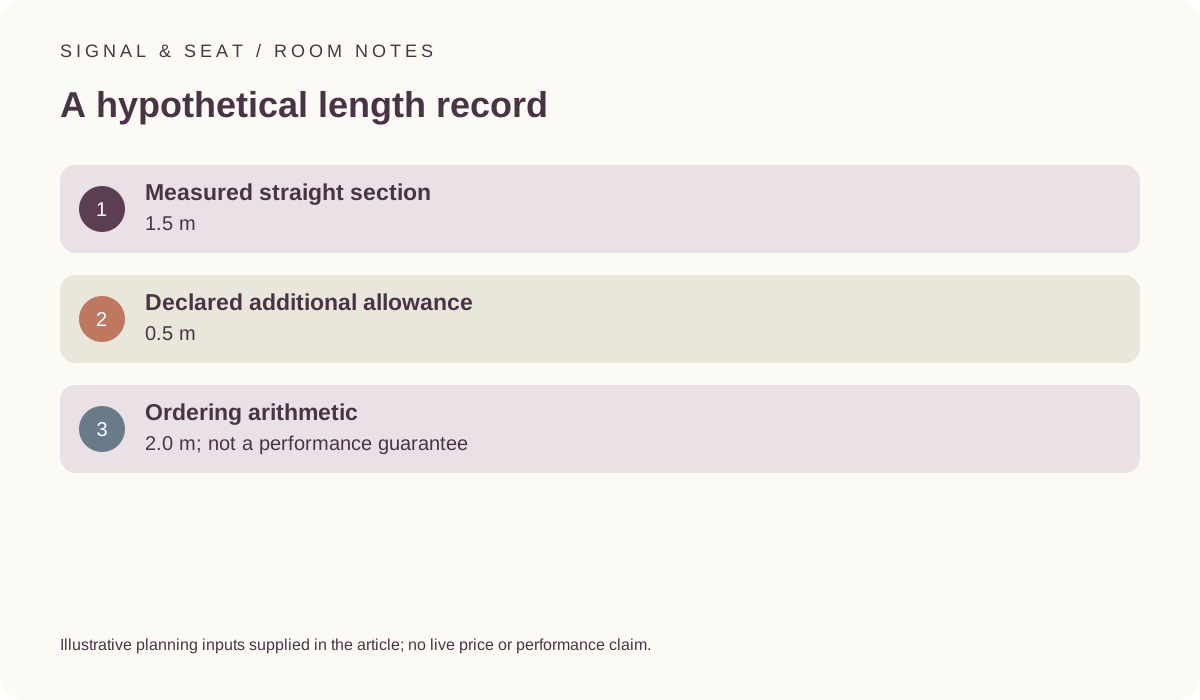
For a hypothetical ordering record, assume a1.5 m measured section and a separately declared 0.5 m allowance. That gives 2.0 m in the arithmetic. These are invented planning inputs, not installation instructions, a minimum bend allowance or a guarantee that a particular cable performs at that length. Follow the actual equipment and cable requirements for the proposed arrangement.
Do not extend this example into a universal maximum cable length or a claim about concealed installation. If a route or installation condition needs an appropriate assessment, preserve that question before buying. The length record and a capability claim are related purchase details, but one cannot establish the other.
Read the complete device requirement before choosing the cable
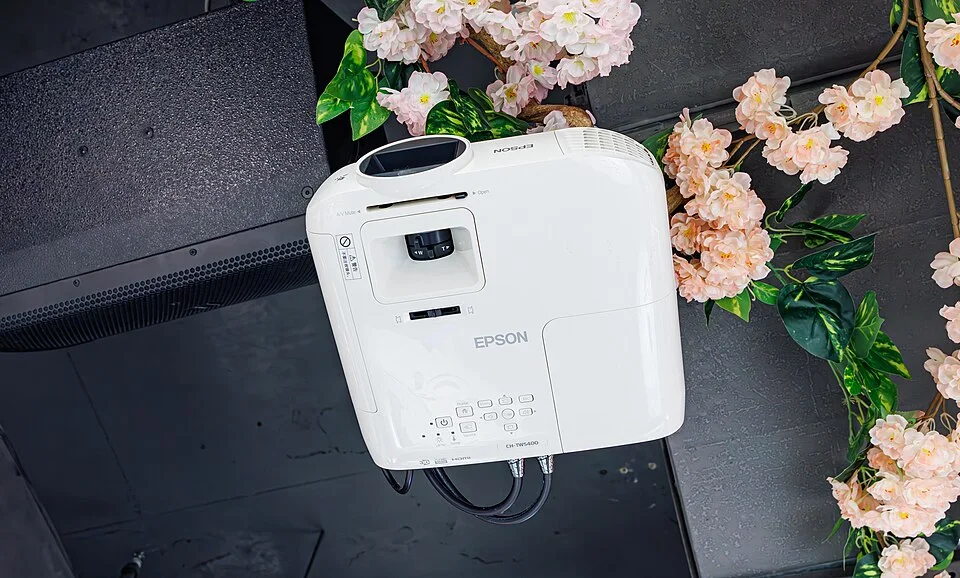
A source, display or intermediate product can have documented conditions for a particular signal. Keep those conditions together instead of choosing a cable from the largest format number in an advertisement. The official Epson EH-TW7100/EH-TW7000 manual is an example that discusses connection and signal requirements for named models. It does not describe the CH-TW5400 in the archival picture.
An appropriately described cable cannot supply a feature the connected equipment does not support. Likewise, a socket’s shape does not establish the relevant input, output or return-channel function. If an important requirement is unknown, keep it unresolved rather than treating a more expensive cable as an automatic solution.
Epson EH-TW7100/EH-TW7000 official user guide ?
Separate cable evidence from a whole-system result
HDMI’s eARC information concerns a named return-channel capability. It should not be read as proof that every desired format works through an arbitrary television, source and audio device merely because a cable is present. Preserve the relevant model documents, source material and settings alongside the cable record.
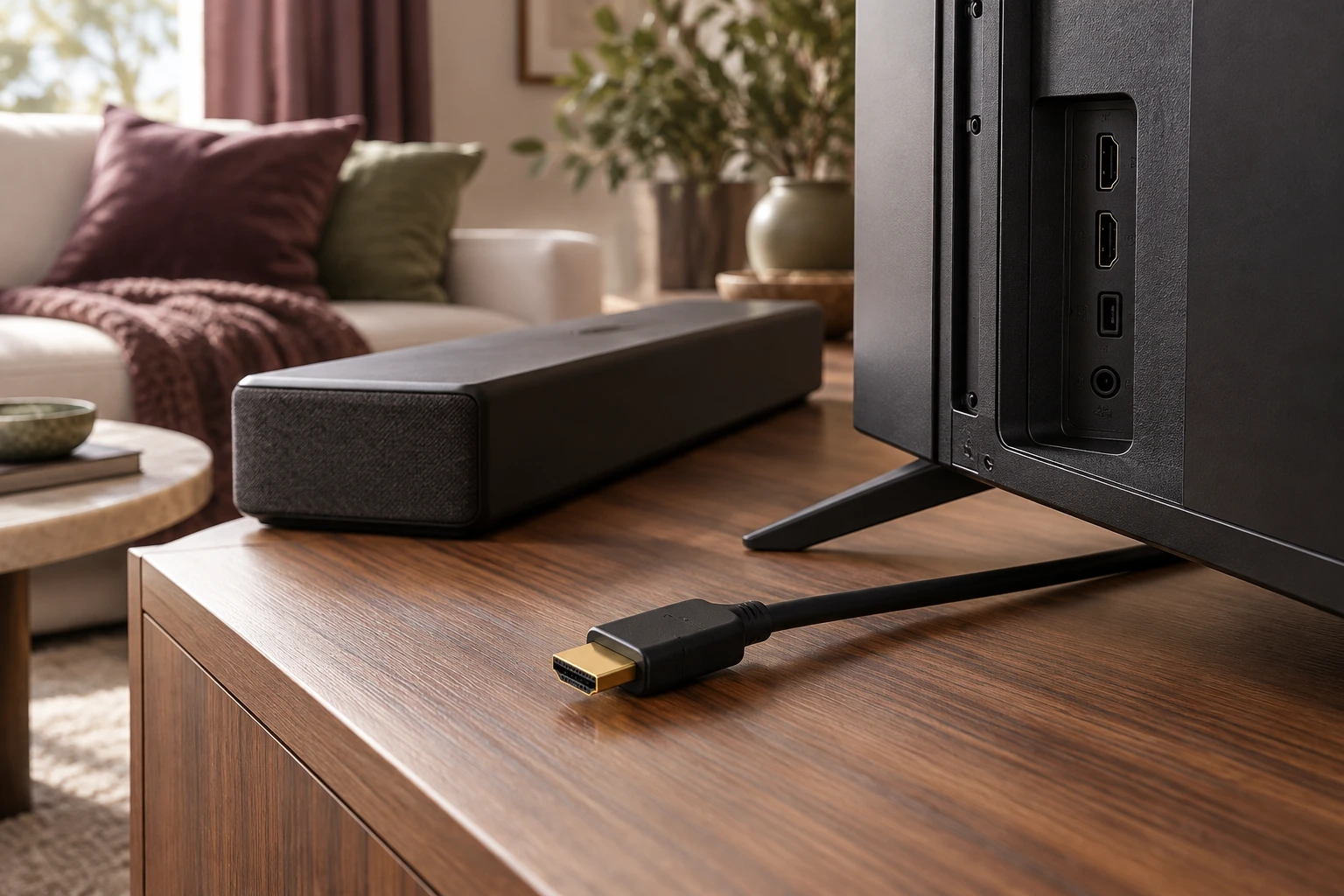
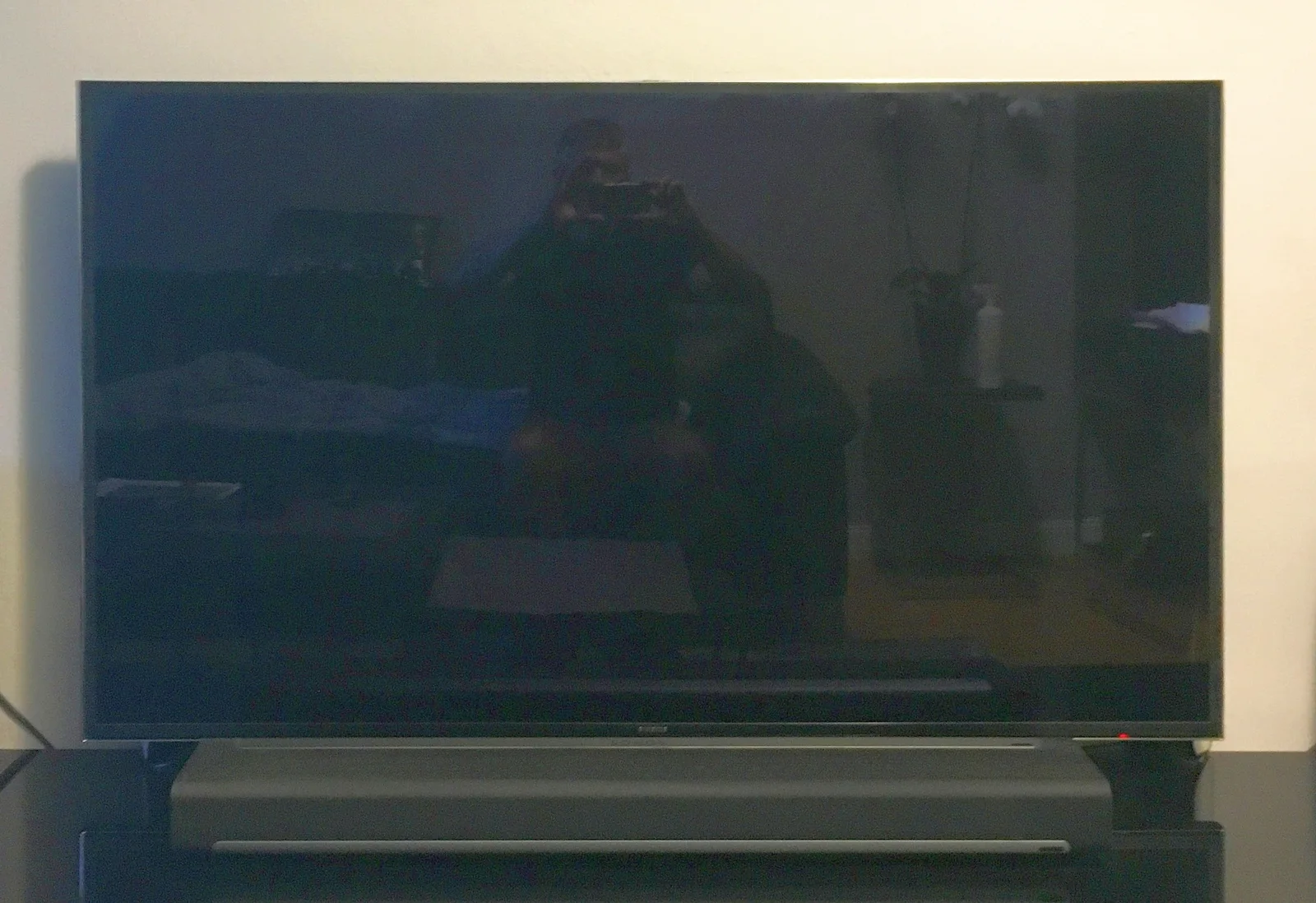
The television photograph is an archival physical example, not a demonstration of the intended path. A clear comparison distinguishes an official cable-category claim, a manufacturer’s device capability and an actual observation in a system. Avoid merging these different evidence types into a performance guarantee that none of the individual sources provides.
HDMI Licensing Administrator: enhanced audio return channel ?
Save the information that would make the purchase reviewable
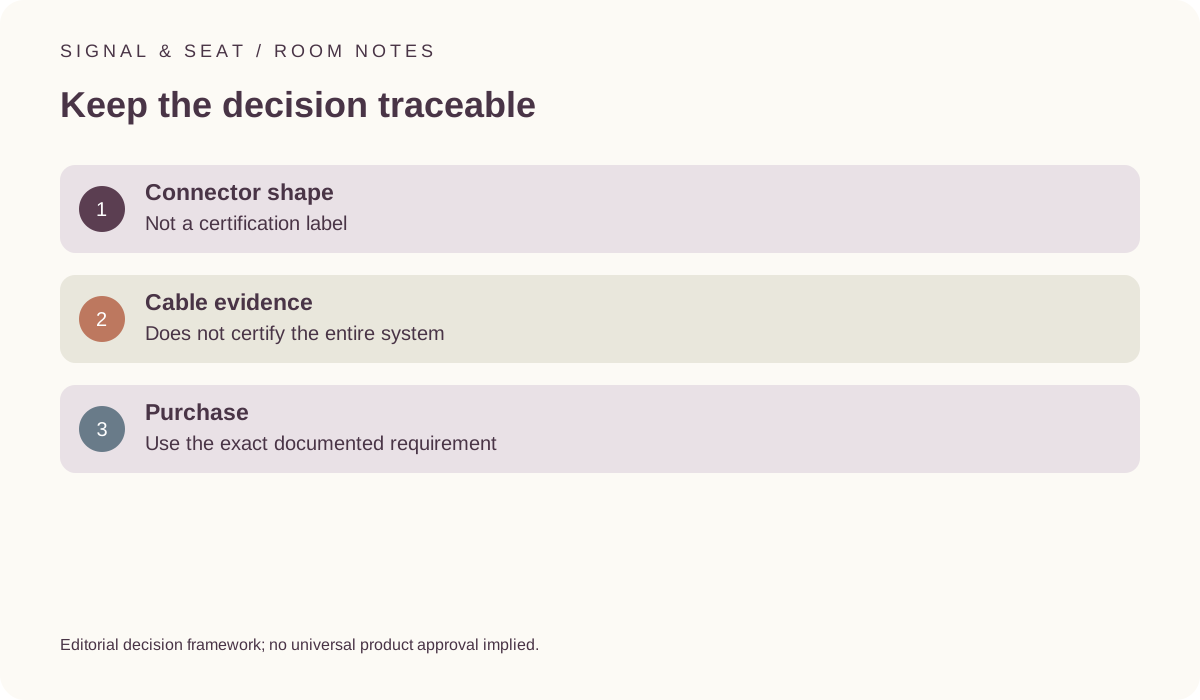
Keep the cable’s actual designation, product identity, length and source of the requirement with the order record. Where a certification programme applies, use the official information to understand its scope and verification process. Do not claim that a picture of a label or an unrelated cable establishes the status of the item in the actual offer.
The useful final decision explains why the documented cable matches the documented task, while leaving other system conditions visible. It should not promise improved picture or sound from an unsupported comparison. If the equipment or intended source changes, review the requirement again rather than assuming the old cable record settles the new path.