Compare screen size from your actual seat
Keep image dimensions, the actual seat and room preferences separate from claims that one diagonal is ideal for everyone.
Updated:
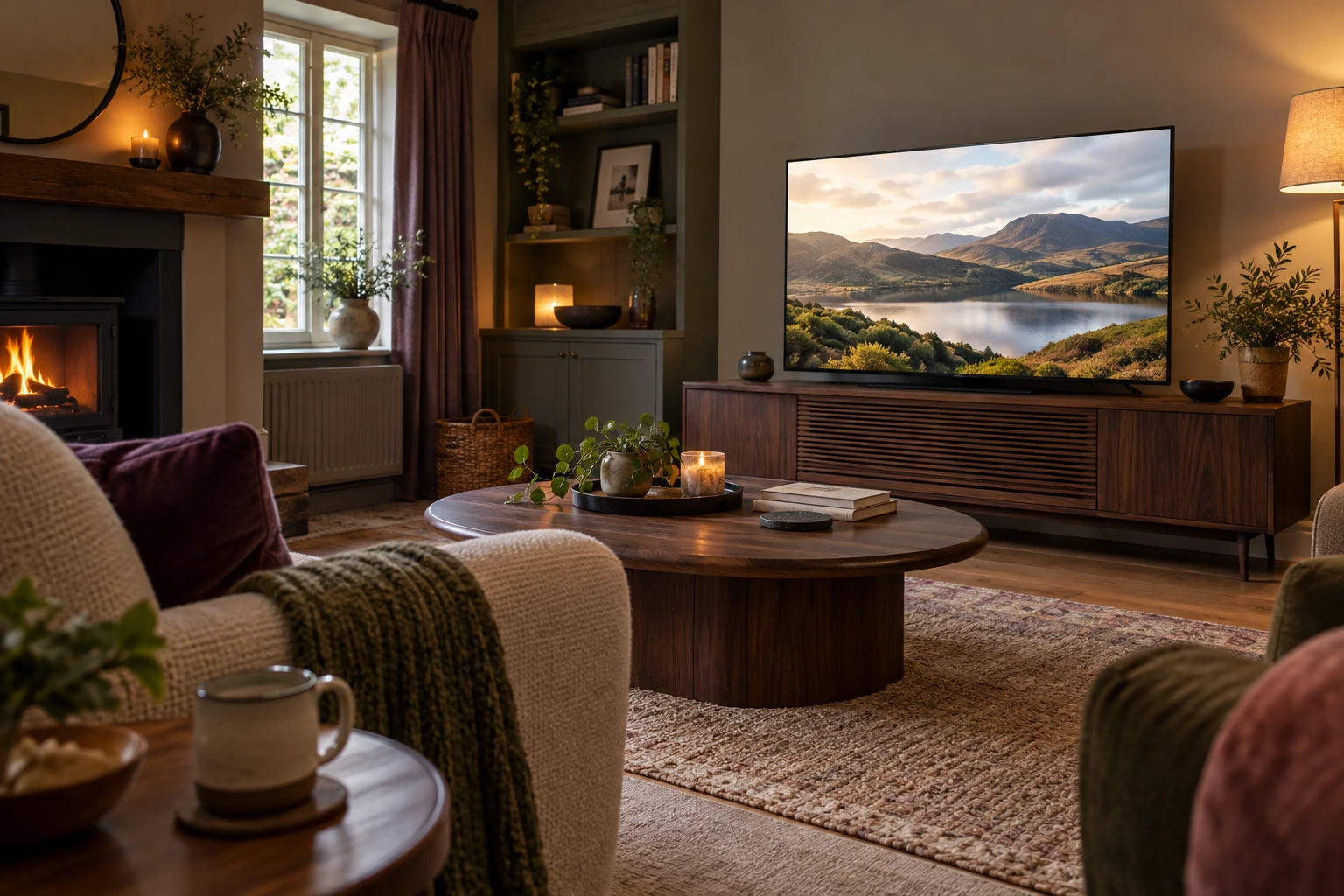
Include the actual seat in the buying brief
Screen size should be reviewed in the room where the household will watch. Record the actual seating position and the task, such as television programmes, games or other source material. A diagonal printed on a listing does not establish that a display will feel right for every person or use. Keep personal preference and any relevant access needs visible instead of treating one formula as a comfort guarantee.
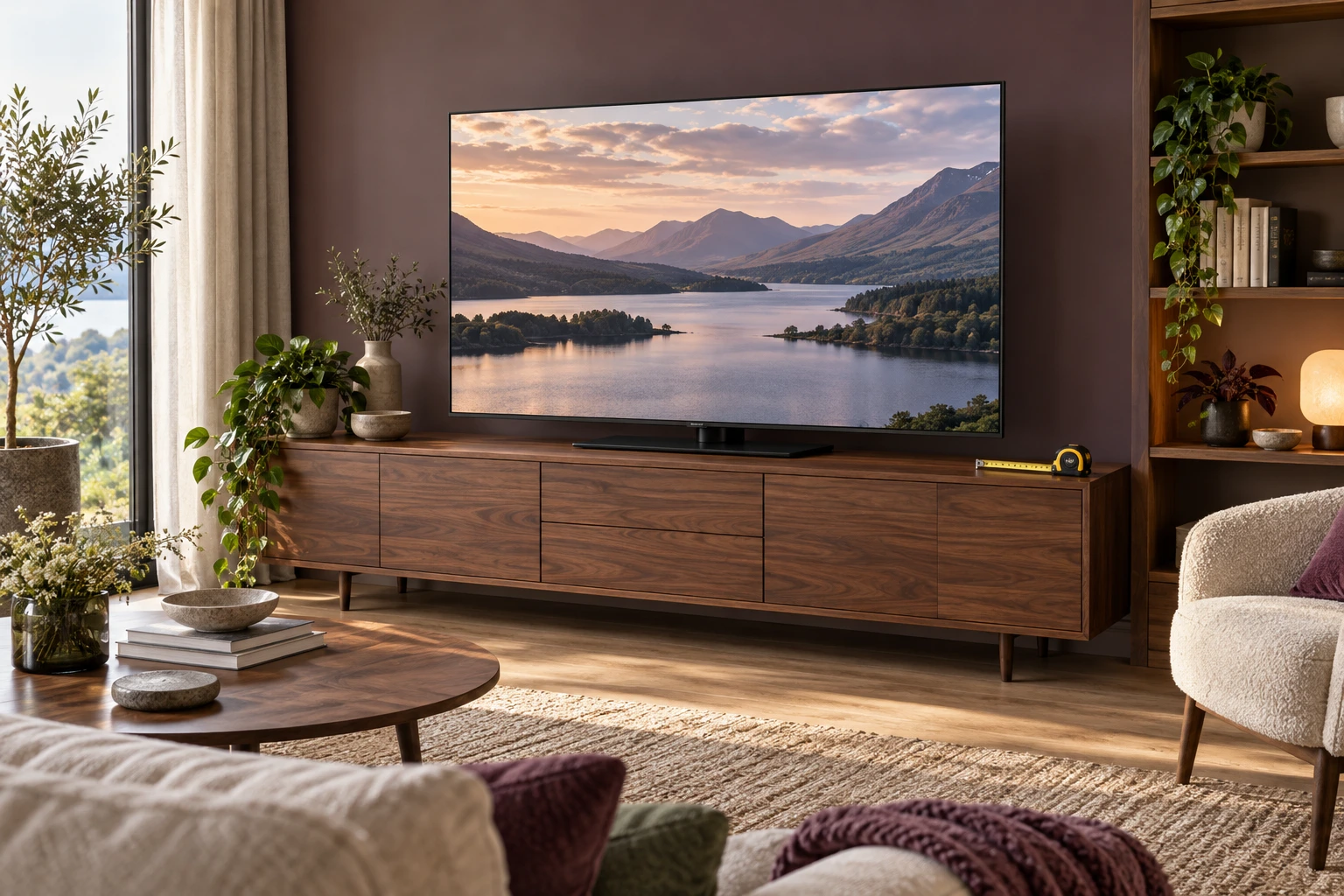
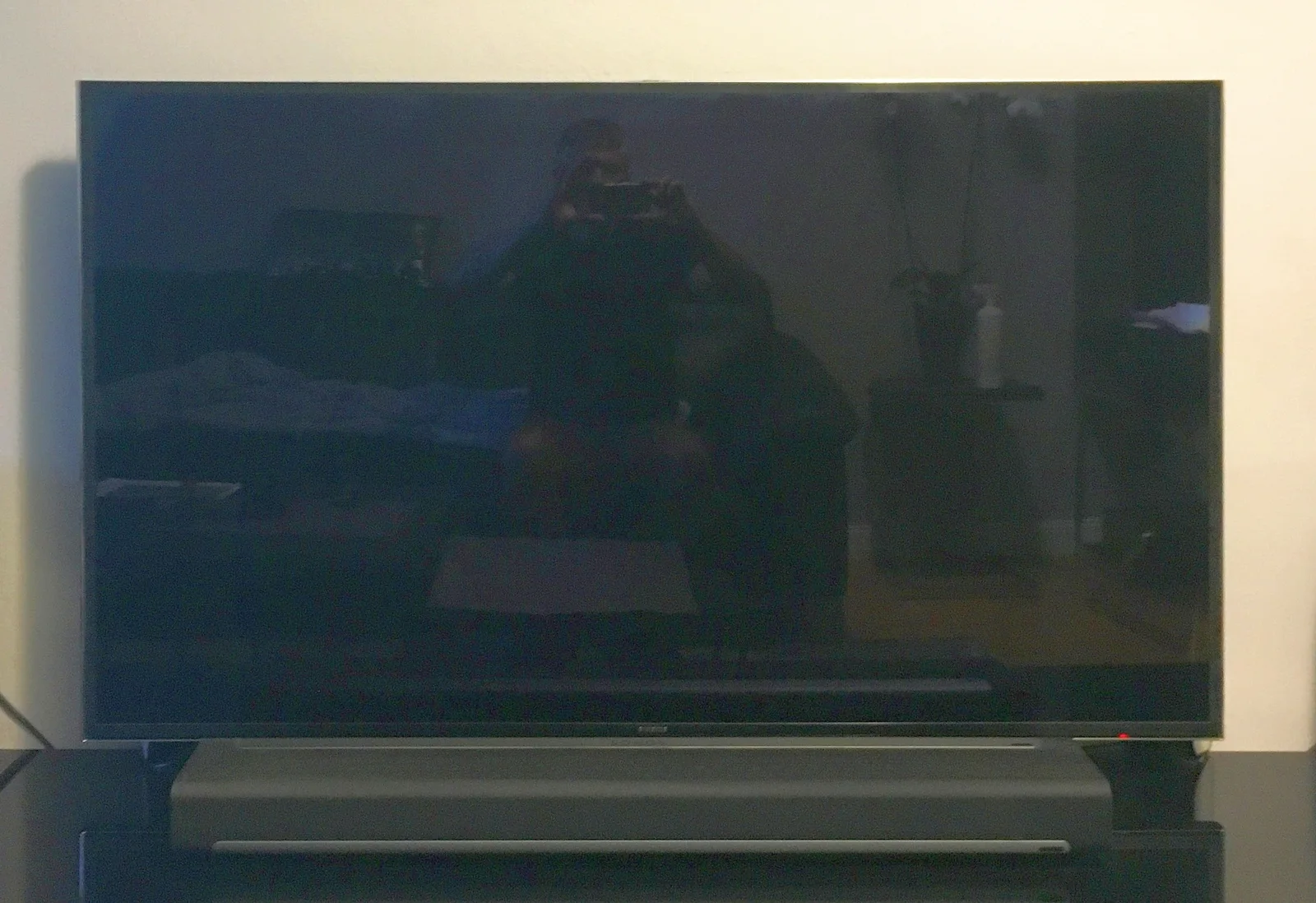
The archived television image identifies equipment only. It is not a picture-quality test or a recommended viewing arrangement. A useful comparison distinguishes the physical set from the image it displays and from the person’s actual position in the room.
Keep width, height and aspect separate
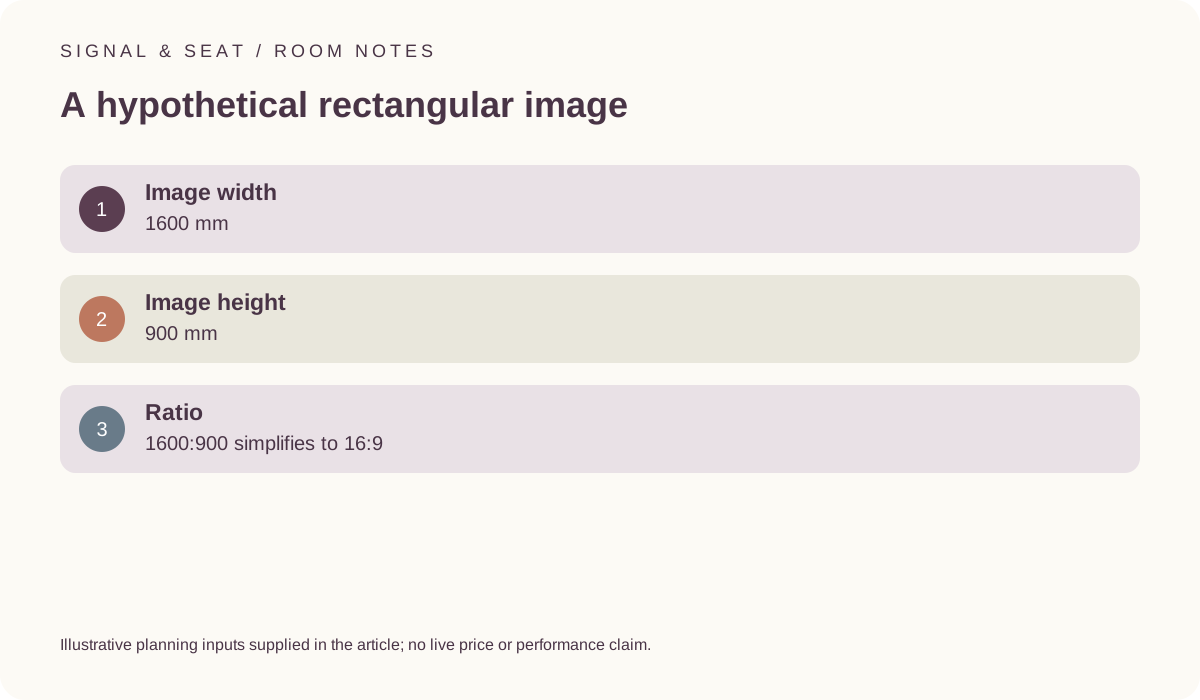
For a purely hypothetical rectangular image 1600 mm wide and 900 mm high, the width-to-height ratio is 1600:900, which simplifies to 16:9. These are illustrative image dimensions, not a specification for the television in the photograph or a recommended purchase size. The calculation explains shape; it does not judge viewing comfort or picture quality.
A physical television can have dimensions beyond the active image, including the frame and stand. LG’s UK product information demonstrates why with-stand and without-stand dimensions belong in different records. Use the exact model’s figures for furniture planning rather than treating an image ratio as the whole appliance footprint.
LG UK OLED55C44LA dimensions and connections ?
Record the room without inventing an optimal distance
Suppose an illustrative room note records a seat 2000 mm from the proposed image plane. That measurement is an input about the room, not a recommendation that every viewer should use that distance. People, source material and preferences differ. Preserve the actual measurement and the reason for the proposed size instead of converting it into an unsupported ideal-size promise.
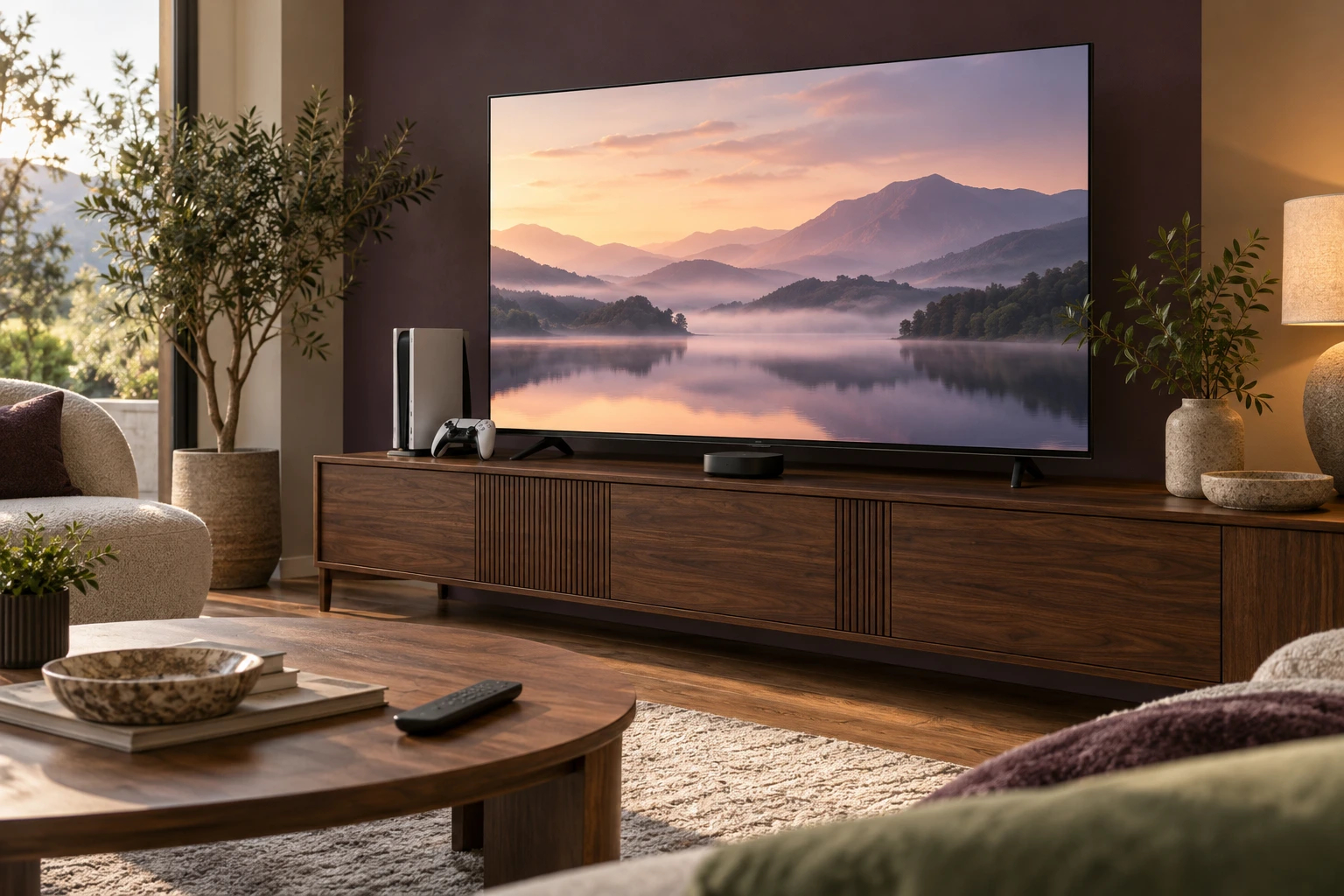
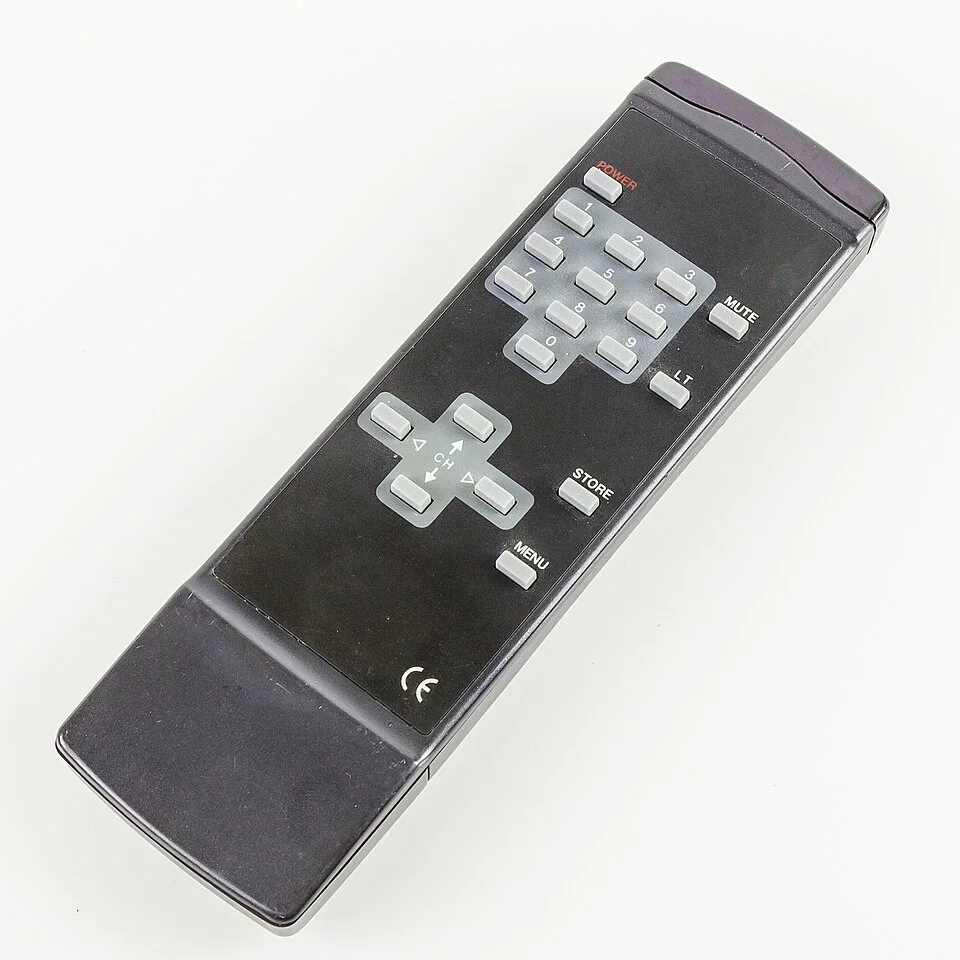
Where a suitable in-person comparison is available, distinguish that observation from a manufacturer specification. A remote-control photo cannot show whether small on-screen text is comfortable for a particular user. Keep those real-use questions open if they have not been assessed, and do not describe a planning worksheet as an accessibility or vision assessment.
Keep source and display claims attached to their conditions
A larger image does not independently establish better detail, contrast or motion for the material you watch. Retain the exact model’s relevant features and the source requirements instead of treating diagonal size as a complete picture-quality score. The signal path, content and settings need their own review. Avoid combining unrelated headline claims into an imagined result that has not been demonstrated.
The photograph of an older display is not evidence of current panel technology or performance. It helps identify physical form only. A useful buying note should say which questions were answered by documentation, which by an actual observation and which remain unresolved.
Compare projection as a different room arrangement
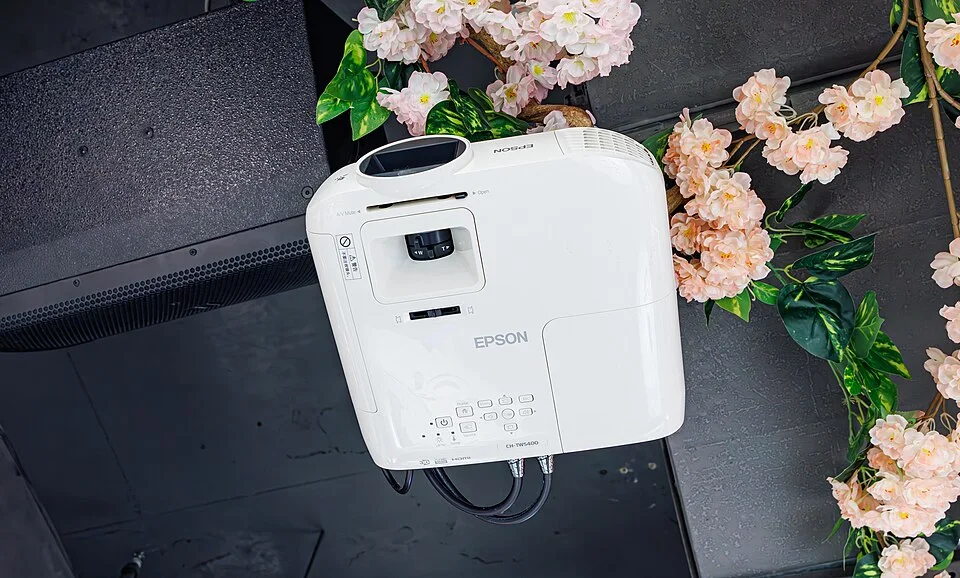
A projected image needs its own model-specific geometry and room review. The Epson manual is an example of a document with screen-size and distance tables; those tables do not turn a television preference into a projector recommendation. Keep projector body space, the image and the seating record distinct. This guide does not provide mounting or wiring instructions.
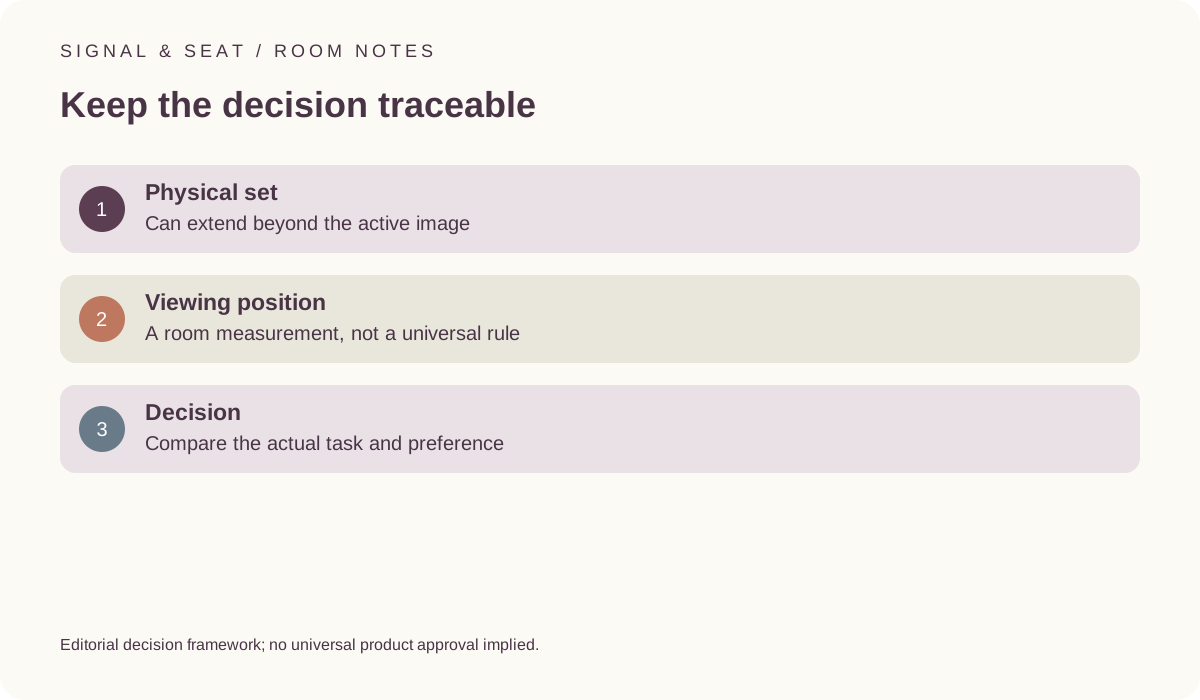
The final comparison should explain why a proposed image size serves the household task from the actual seat, with preference and uncertainty preserved. It should not guarantee comfort or imply that one advertised diagonal answers every room question. Revisit the record if the seat, source or room arrangement changes.
Epson EH-TW7100/EH-TW7000 official user guide ?