Separate TV width, stand footprint and clearance
Use the exact television’s dimensions and the applicable furniture and operating requirements as different records.
Updated:
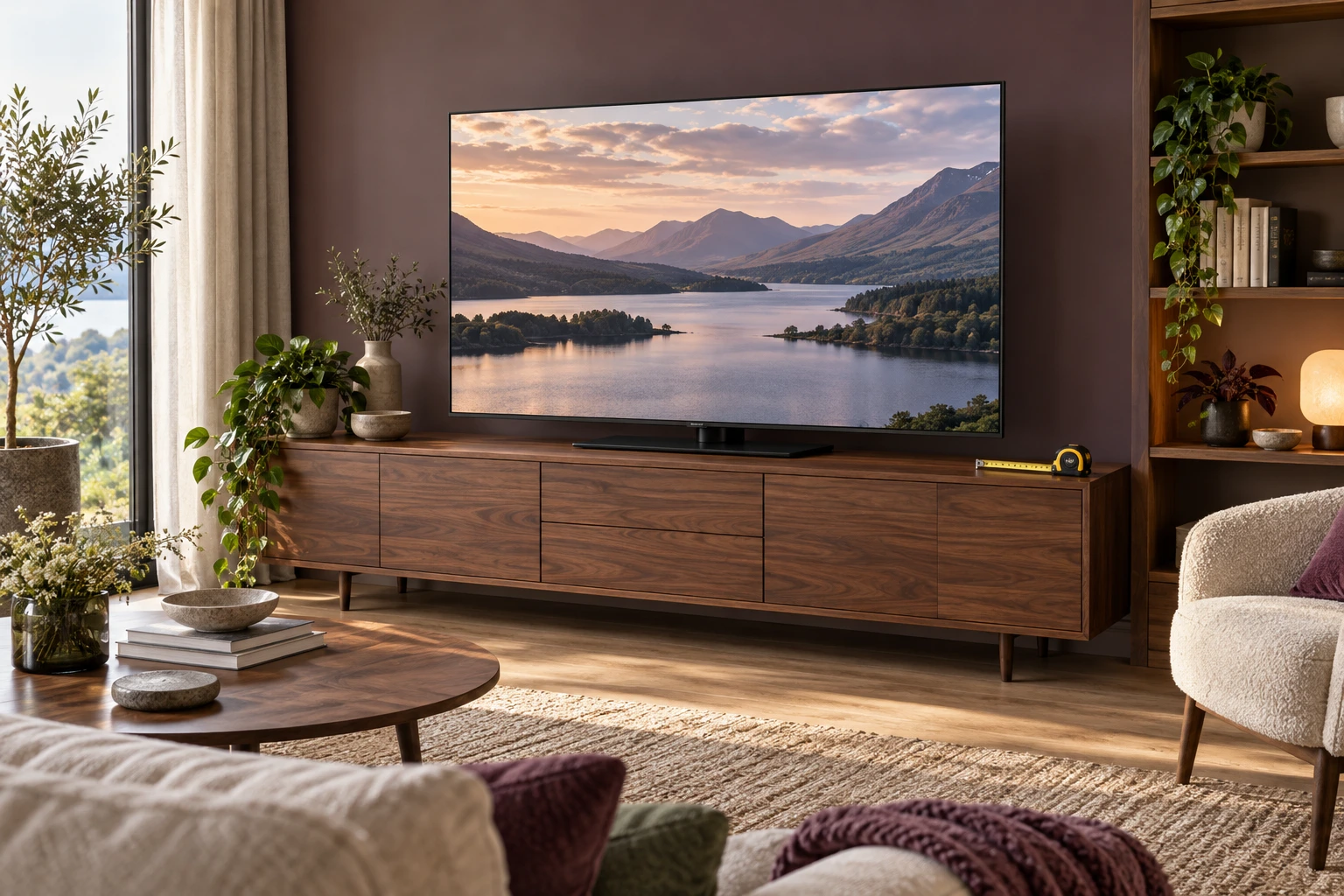
Measure the intended configuration
A screen’s advertised diagonal does not give the width, depth or support requirements of the installed television. Identify the exact regional model and whether it will use its supplied stand or another approved arrangement. Keep the dimensions for that configuration together. A photograph of a similar television cannot establish the size or the requirements of the candidate in your quote.
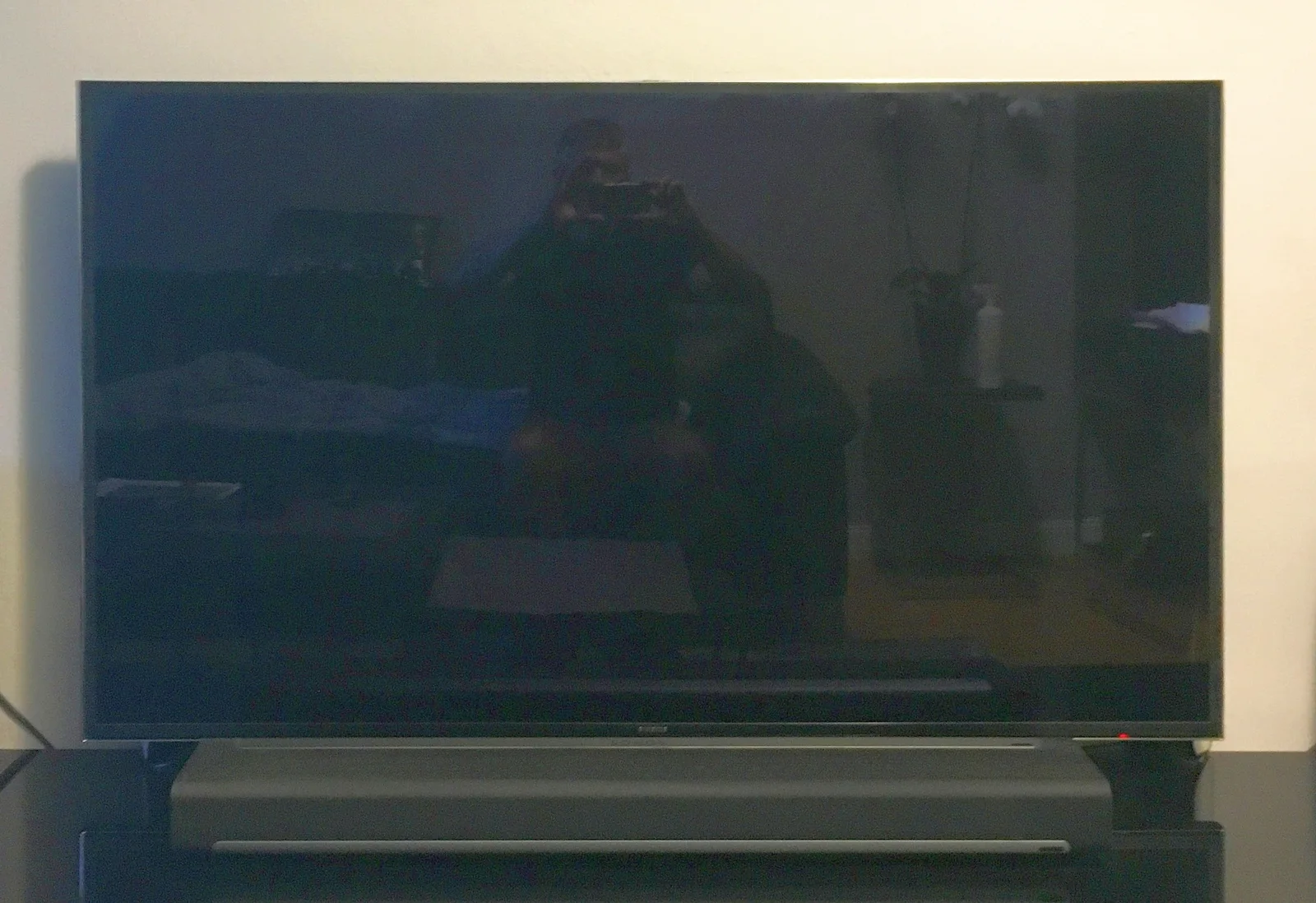
The archived Samsung image makes a television and separate soundbar visible. It is not an LG C4 picture, a current bundle or a furniture-fit test. Use it to distinguish the physical pieces, then obtain the actual dimensions and instructions for the equipment you intend to buy.
Read the manufacturer example as separate measurements
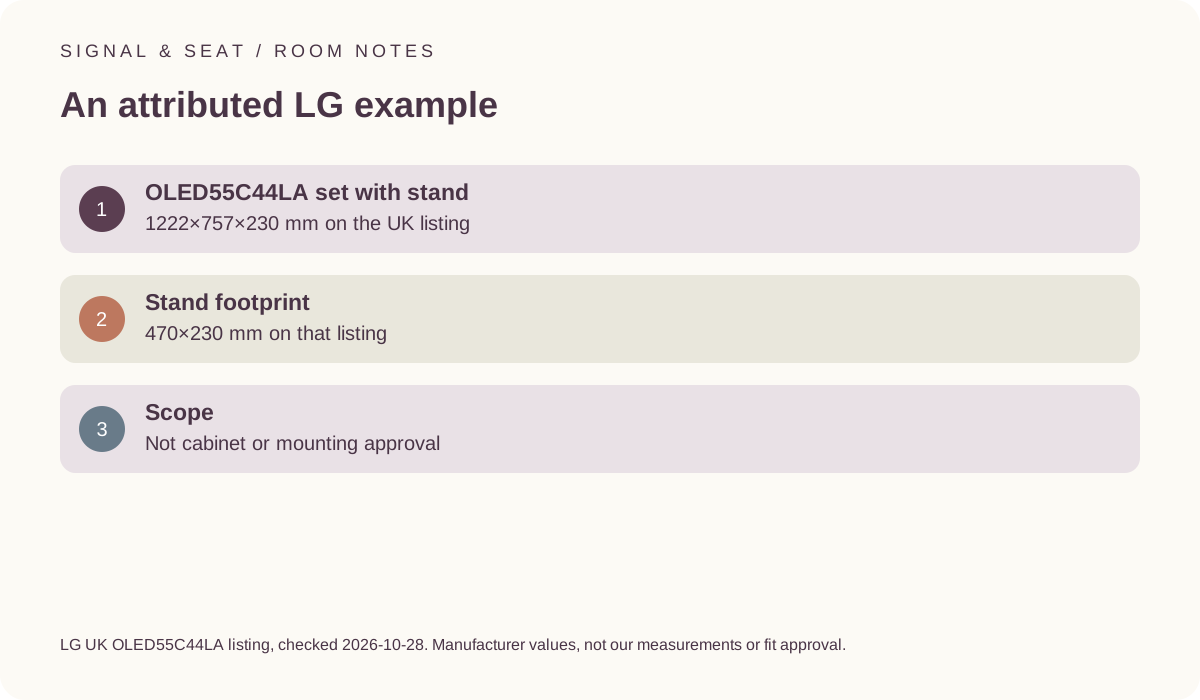
LG’s UK OLED55C44LA listing gives dimensions with stand of 1222×757×230 mm and a stand footprint of 470×230 mm. Its without-stand dimensions are 1222×703×45.1 mm. These are attributed specifications for that named model, not our measurements or a general 55-inch template. Preserve the stated axis order and configuration in your own notes.
The set’s width and the stand’s footprint answer different questions. A narrower stand does not imply permission to use furniture that fails another requirement. Depth, stability, load-bearing capacity and the manufacturer’s operating conditions remain separate checks. The dimensions alone are not an installation or mounting approval.
LG UK OLED55C44LA dimensions and connections ?
Show the width arithmetic without claiming safe fit
For a hypothetical width comparison, assume 1400 mm of usable internal space and equipment width of 1222 mm. That leaves 178 mm before any required side clearance. If a purely invented planning assumption adds 50 mm at each side,78 mm remains after those allowances. The 50 mm input is not an LG clearance instruction and must not be treated as one.
Our cabinet-width tool performs that subtraction using your entered values. A nonnegative result answers only the declared width arithmetic. It cannot certify height, depth, airflow, furniture strength or stability. Replace assumptions with the actual requirements before relying on the proposed arrangement, and keep any unresolved physical question visible.
Include the other equipment and ordinary access
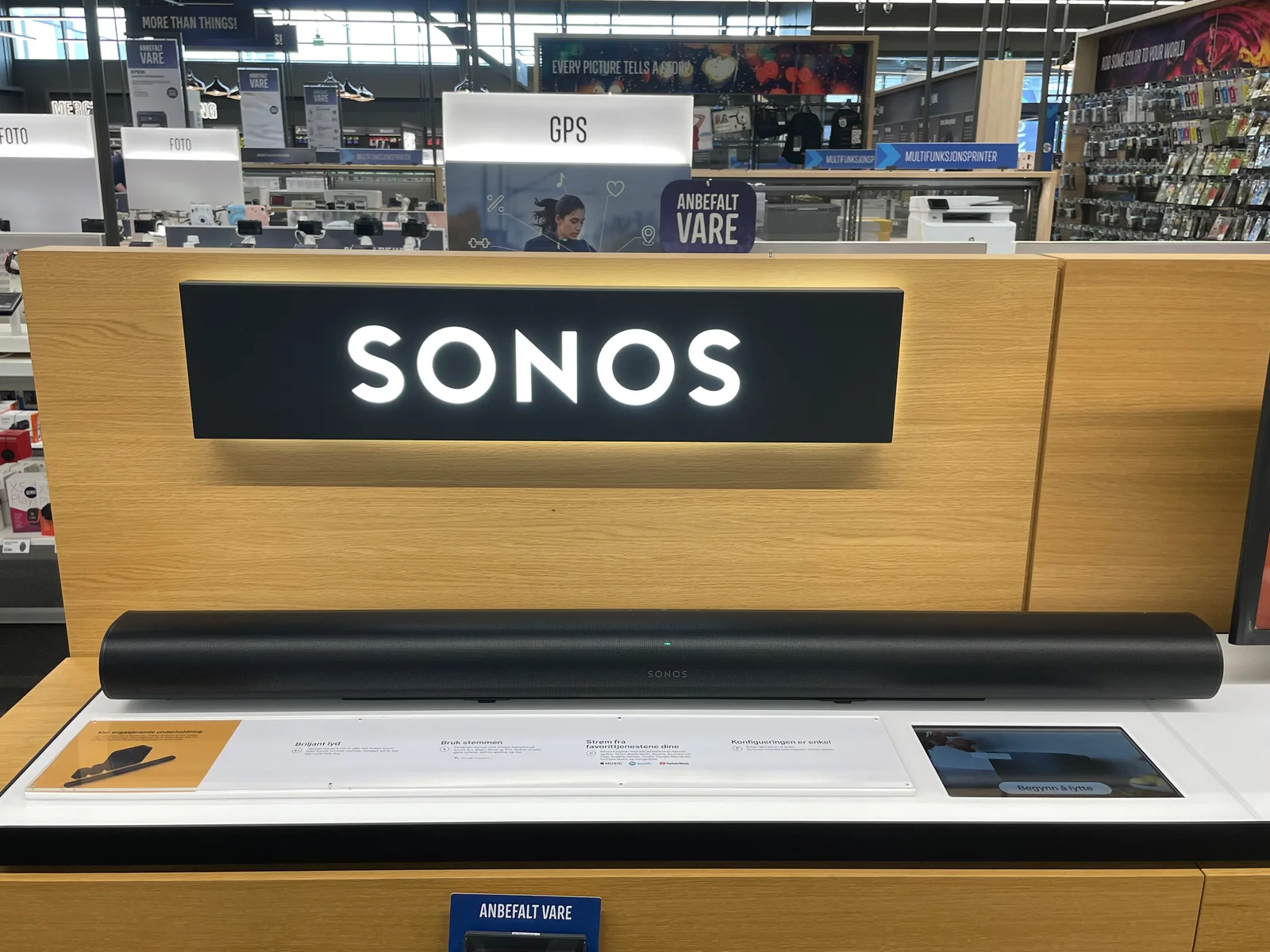
A soundbar, source box or other component can need space and access of its own. Record each piece separately instead of assuming that everything fits within the television’s outline. Keep the exact manuals’ operating and access conditions with the plan. This guide does not provide wall-fixing, furniture modification or electrical work instructions.
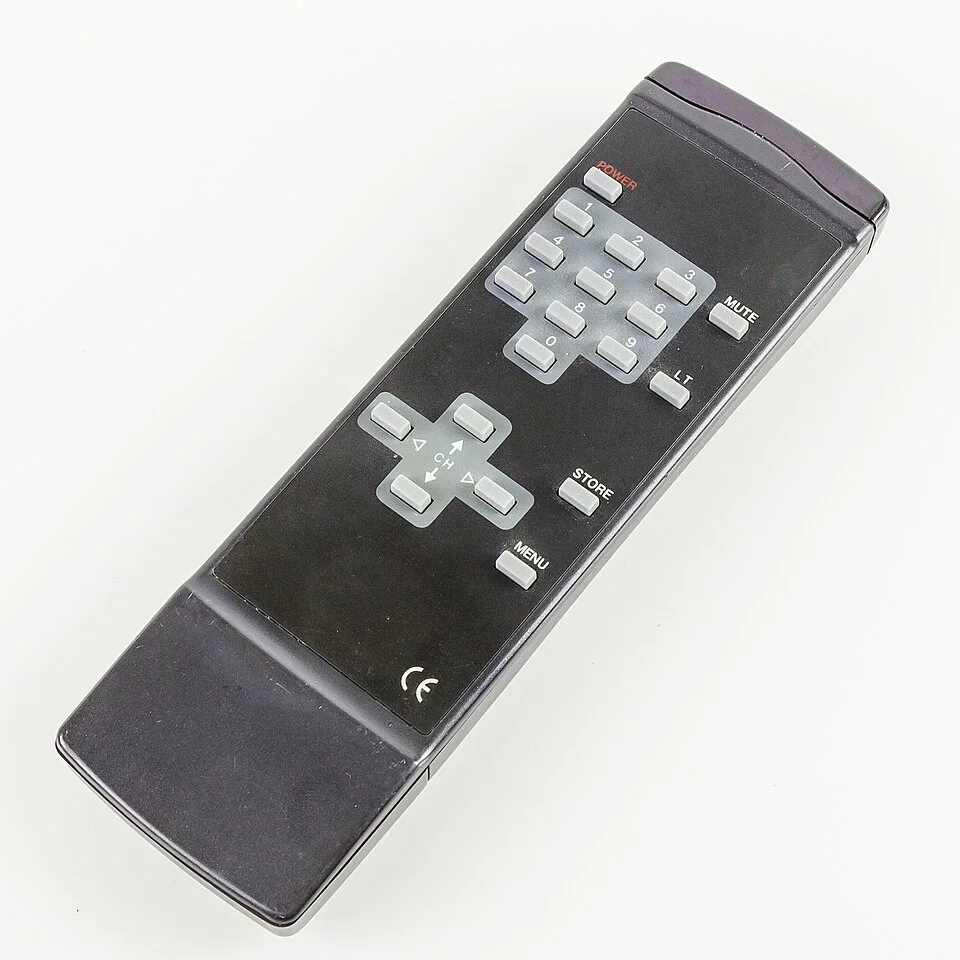
The soundbar photograph illustrates another physical component, not a tested match for the pictured television or the named LG model. Also consider the documented control arrangement and ordinary access for the household. The remote image is context for that task; it does not establish that one control operates every component or that a sensor remains unobstructed in a proposed layout.
Finish with a traceable space decision
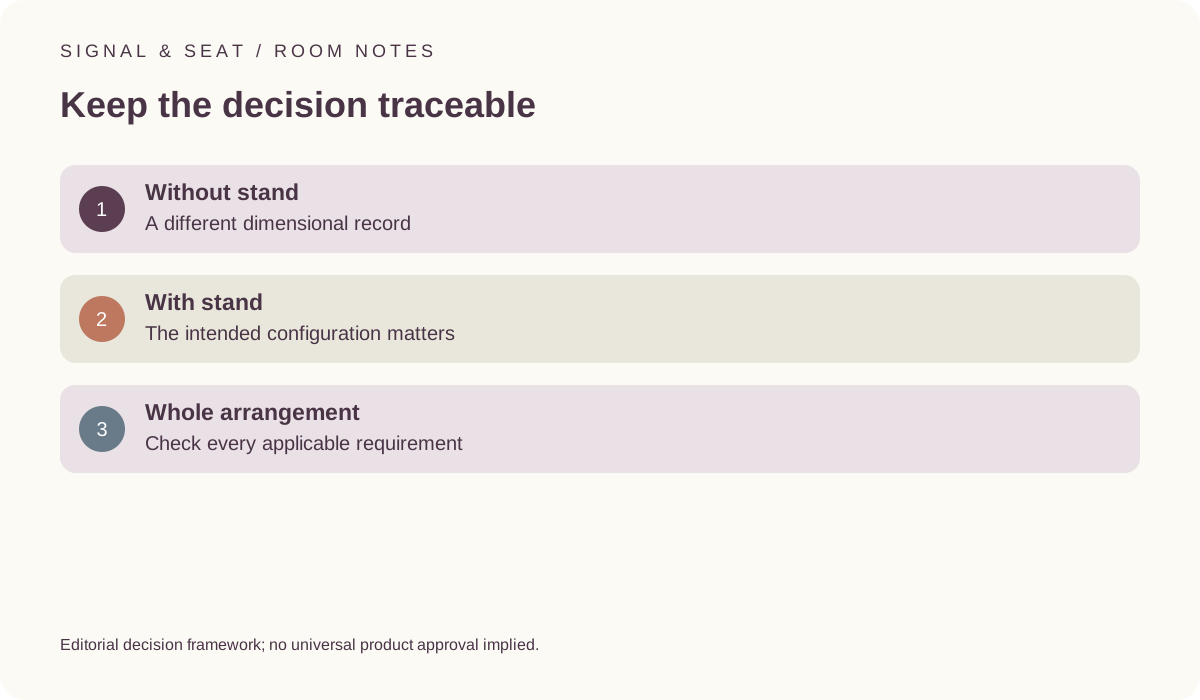
Retain the model designation, configuration, manufacturer dimensions and furniture information beside the quote. Mark each unresolved requirement rather than assigning the whole arrangement a simple fits label after checking only width. If the stand or furniture changes, revisit the record instead of reusing the earlier conclusion automatically.
A useful comparison explains what the measured space and documented requirements establish, while leaving installation safety to the appropriate instructions and assessment. It should not turn a diagonal size, a narrow stand or our hypothetical clearance arithmetic into a guarantee. Resolve a significant physical uncertainty before ordering accessories intended to make the arrangement work.